
Why AI Tokens Are the New Currency of Business

Diwa “Wawi” del Mundo
Founder & President · Apper Cloud Labs
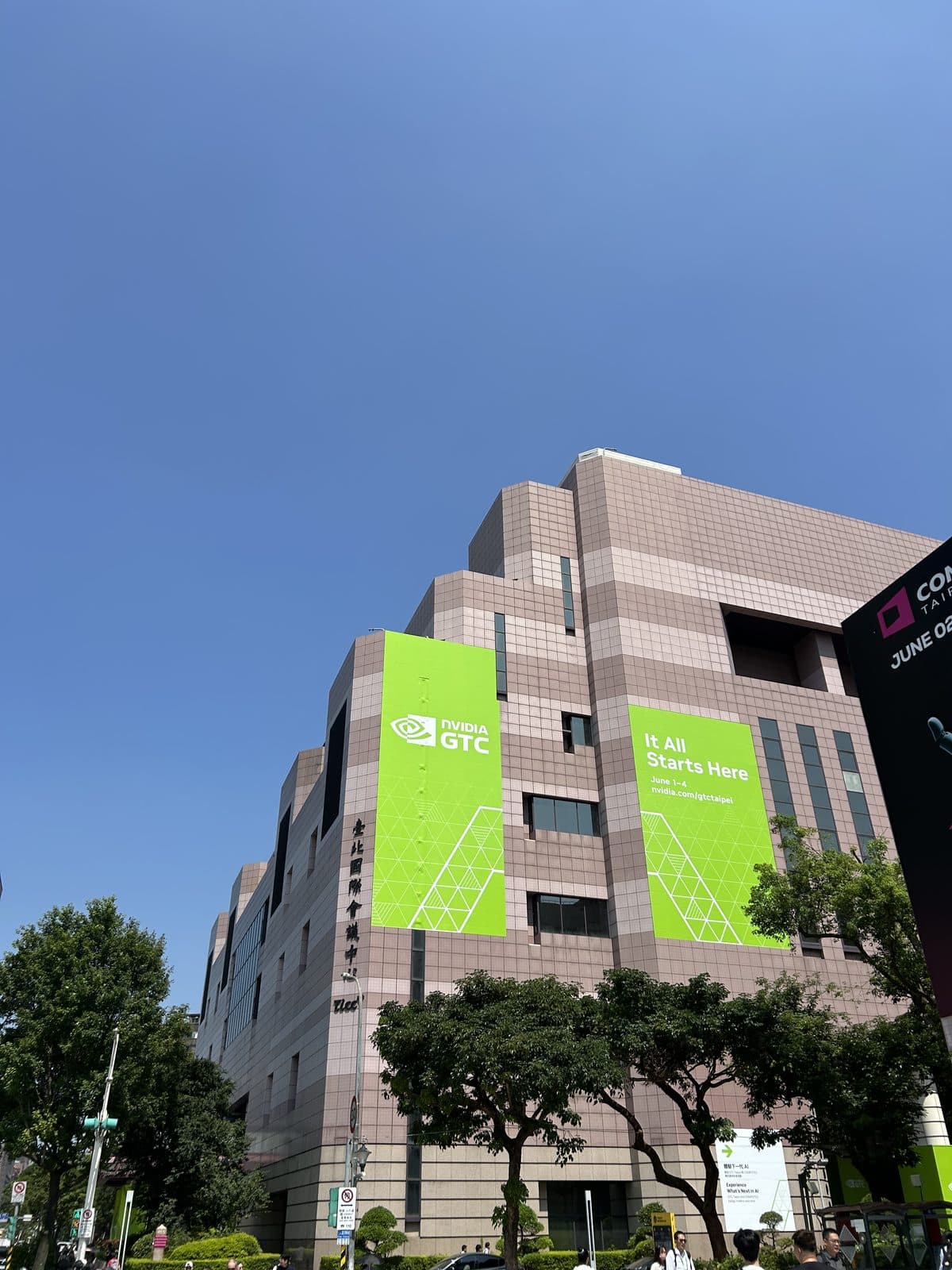
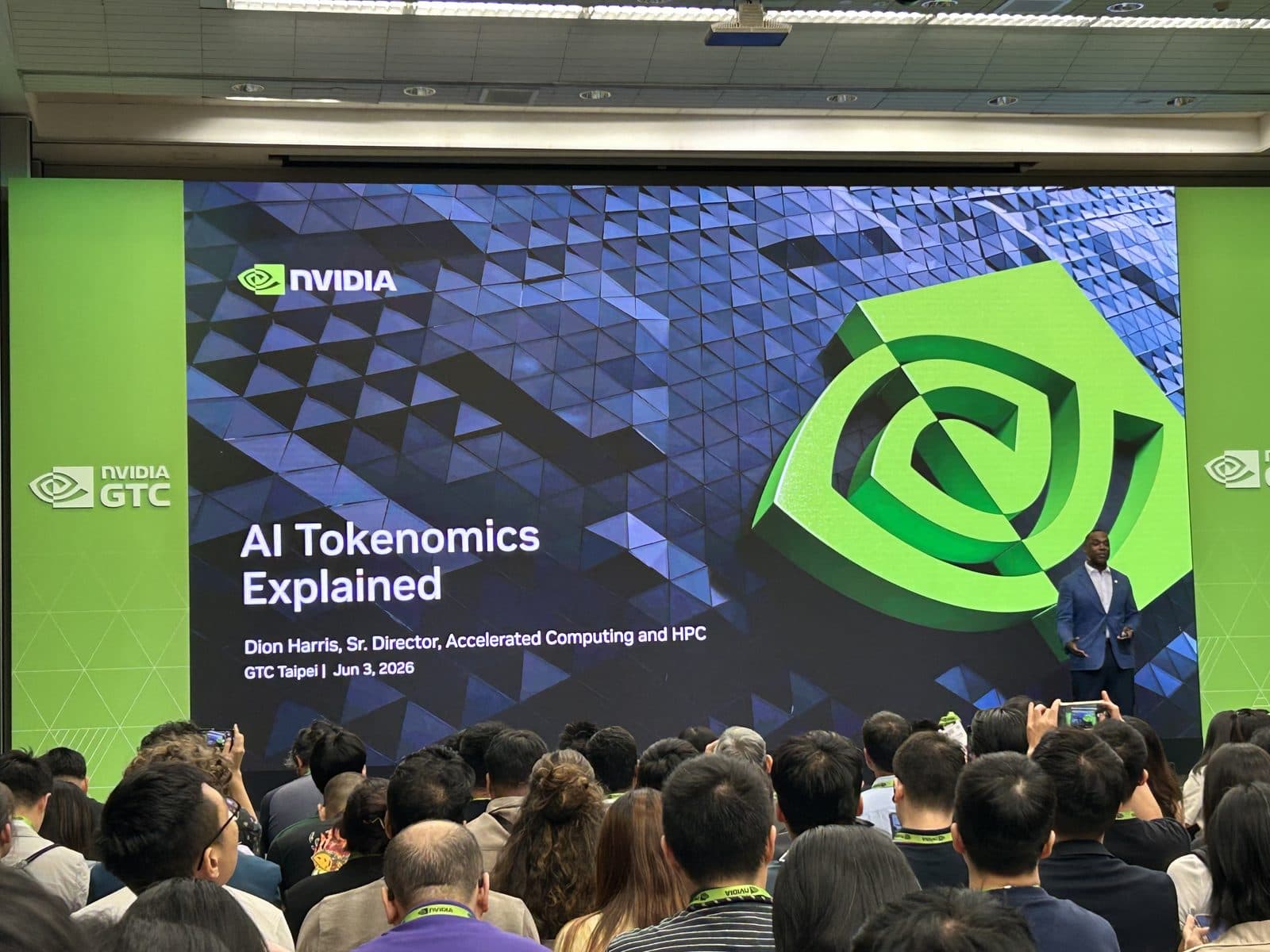
This talk just wrapped this morning at NVIDIA GTC Taipei — and I'm writing this while the event is still going. Sr. Director Dion Harris presented something that every business leader building on AI needs to understand. It wasn't about a new model. It wasn't about a new chip — well, not entirely.
It was about token economics. And once you understand it, you'll never look at your AI bill the same way again.
Tokens Are Not Just a Technical Detail
When developers talk about tokens, it's easy to glaze over. But here's the business reality: tokens are the unit of value in the AI economy. Every question answered, every document summarized, every line of code generated — it all runs on tokens.
The economics of AI boil down to four questions:
- How valuable is each token? (Token Utility)
- How many tokens will you need? (Token Supply)
- How variable is your demand? (Token Demand)
- How do you make money from tokens? (Token Monetization)
Get these four right, and AI becomes a growth engine. Get them wrong, and it becomes a cost center.
Not All Tokens Are Created Equal
Here's the insight that most people miss: the value of a token depends on what it's doing.
A simple chat interaction? Fast, cheap, high volume. A deep research task or an agentic coding workflow? Slower, more complex, and dramatically more expensive — but also dramatically more valuable.
| Use Case | Throughput | Token Value |
|---|---|---|
| Chat | ~1.8M TPS/MW | Low |
| Deep Research | ~0.8M TPS/MW | Medium |
| Agentic Coding | ~0.3M TPS/MW | High |
As models get more capable and tasks get more complex, you produce fewer tokens per megawatt — but each token is worth more. The business question isn't “how do we reduce token cost?” It's “are we matching the right model to the right task?”
Agentic AI Will Multiply Your Token Consumption by 100x
This is the number that should be on every CTO's radar.
| Chat | Agentic Coding | |
|---|---|---|
| Users | 50,000 | 10,000 |
| Tokens per Request | 1,000 | 20,000 |
| Reasoning Overhead | +500 | +5,000 |
| Loop Iterations | 1 | 3 |
| Total Token Demand | 150M | 15B |
Fewer users. One hundred times the token demand.
Why? Because agentic AI doesn't just answer — it thinks, plans, checks, and iterates. Each loop consumes tokens. Each tool call consumes tokens. Each reasoning step consumes tokens.
If your infrastructure planning is based on chat-era assumptions, you will be caught off guard when your teams shift to agentic workflows. And that shift is already happening.
The Right-Sizing Framework
Before you scale, you need to answer six design questions honestly:
Versatility or Task Specificity?
A general-purpose model costs more but covers more ground. A fine-tuned model is cheaper for the right narrow task.
Reasoning or Retrieval?
Heavy reasoning (chain-of-thought, multi-step) burns more tokens than retrieval-augmented generation (RAG).
Accuracy vs. Cost?
Not every task needs frontier model quality. A ₱3/million-token model might be perfect for 80% of your workflows.
How long does the answer stay useful?
If the output is time-sensitive, you can't cache it. If it's not, caching can cut costs dramatically.
What's the cost of being wrong?
High-risk decisions justify premium models. Routine classification tasks don't.
Autonomous or Predictable?
Agentic systems are powerful but expensive. Deterministic pipelines are cheaper and easier to audit.
The best AI deployments start with frontier models to validate, then right-size down to the most efficient setup that still meets your SLOs.
Four Ways to Actually Make Money from Tokens
Token economics isn't just about managing costs. It's about building revenue models around AI output. Here are the four paths:
Sell tokens directly.
If you're a platform company, you can charge customers per million tokens processed — the same way cloud providers charge for compute.
Build AI-native products.
Launch new offerings that couldn't exist without AI. Token cost is baked into your product economics from day one.
Enhance existing products.
Use AI to improve margins, reduce churn, and increase engagement. The token cost is offset by higher lifetime value.
Transform internal operations.
Deploy AI to cut costs and accelerate execution inside your organization. This is the fastest path to ROI for most businesses.
Most Philippine businesses we work with at Apper are starting at #3 and #4 — and that's the right move. Prove the value internally before you build a market around it.
The Infrastructure Reality
Here's the hardware side of the story, because it matters more than people realize.
NVIDIA's new Vera Rubin + LPX platform unlocks what they're calling a ₱17-trillion (US$300 billion) annual revenue opportunity — 10x more than the previous Blackwell generation — from the same gigawatt of compute.
The math is straightforward: better hardware = more tokens per watt = more revenue per dollar of infrastructure spend.
The DSX AI Factory Platform, their software stack on top of this hardware, adds another 40% token yield from the same physical infrastructure through better power optimization and resource management.
100×
token demand: agentic vs. chat
US$300B
annual revenue opportunity (Vera Rubin)
+40%
token yield from DSX platform
For enterprises and cloud providers making infrastructure decisions right now, this is a critical data point. The gap between platforms is no longer incremental — it's generational.
What This Means for You
If you're building AI into your products or operations in 2026, here's the practical takeaway:
Think in token economics, not just feature lists. Every AI decision has a cost structure. Understand it before you commit.
Plan for agentic scale now. Even if you're not running agentic workflows today, design your infrastructure as if you will be in 12 months. Because you probably will.
Match the model to the task. Not every workflow needs the most powerful model. Right-sizing is not cutting corners — it's good engineering.
Build toward a token revenue model. Even if you're not selling tokens today, the businesses that will win are the ones that figure out how to turn AI output into measurable business value.
The AI economy is being built on tokens. The question is whether your business is positioned to produce them efficiently, deploy them intelligently, and monetize them effectively.
That's the work we do at Apper Cloud Labs — helping Filipino businesses move from AI experimentation to AI-powered scale.
Sources
Diwa “Wawi” del Mundo
Founder & President, Apper Cloud Labs
Wawi is a Claude Certified Architect and holds the AWS Certified Generative AI Developer – Professional credential, alongside all 14 AWS certifications, CISSP, and CCSP. He founded Apper Cloud Labs in 2019 and today leads its AI practice, with Claude as the technical center of gravity and cloud infrastructure as the foundation that gets the work into production.